| |
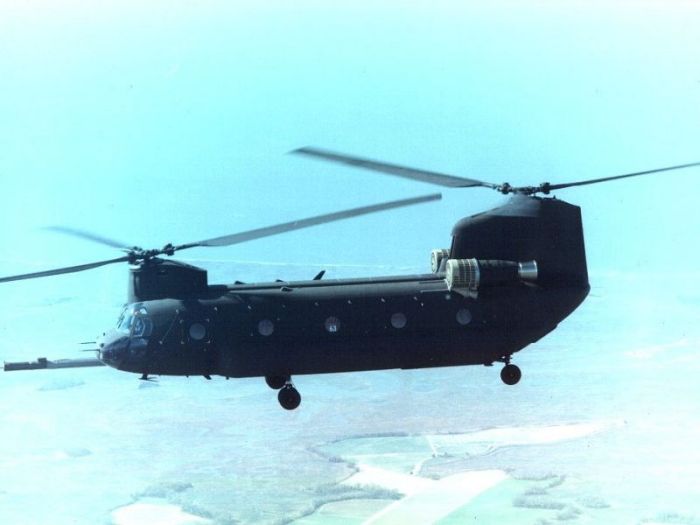
Pictured below is a Boeing CH-47D helicopter with the Engine Air Particle Separator (EAPS) system installed on the engine inlets. The EAPS did a phenomenal job of keeping the engines clean and free from damage due to foreign object ingestion. However, having EAPS installed prevented the crew from conducting a thorough pre-flight of the engine inlet area. Smart Chinook pilots were careful to check each and every area to ensure airworthiness of the helicopter. Since the Lycoming T55-L-712 engines had a nasty habit of sucking things down their throats during a normal days mission, pilots were wary to accept aircraft they could not examine in detail. The plan for the EAPS was to pull the canisters forward every 25 flight hours and examine the inlet area for damage. Unfortunately, in far too many cases, the 25 hour inspection revealed severe damage to the inlet. As it turned out, the swirl cups inside the EAPS that trap and eject unwanted particles overboard instead of allowing them to pass into the engine were breaking off and falling inside. There were several hundred swirl cups inside each EAPS canister. The result of the cups breaking off and falling inside was some heavy damage to the engine. This forced the pilots to not trust the EAPS at all, since for most missions, both engines were required in order to fly. The EAPS was an excellent idea that simply needed to be refined. |