| |
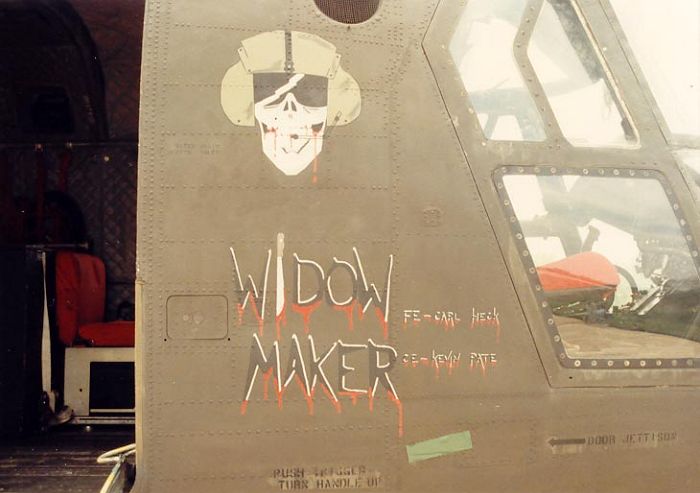
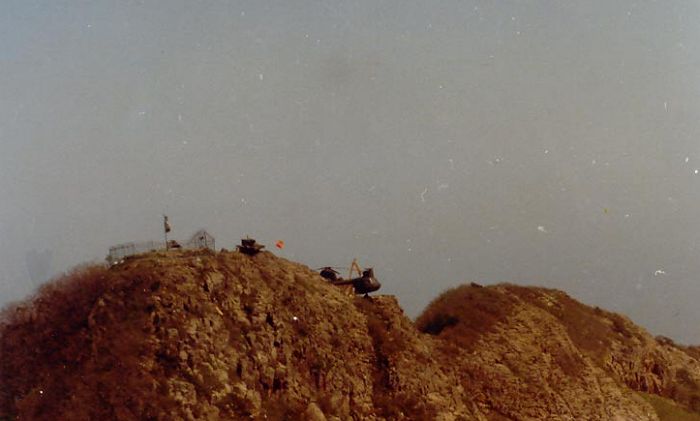
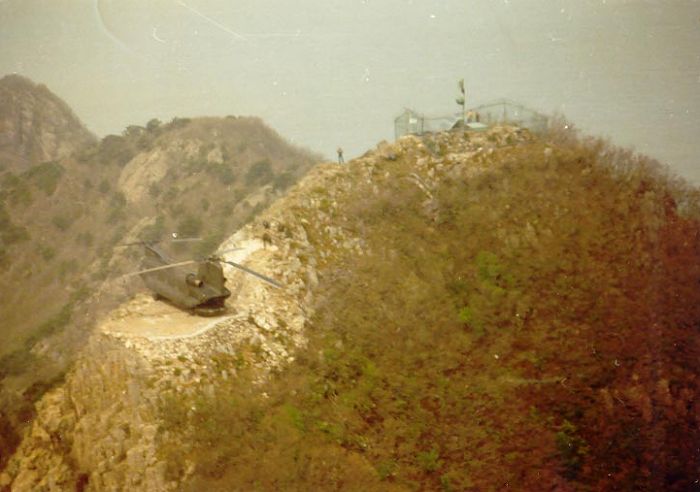
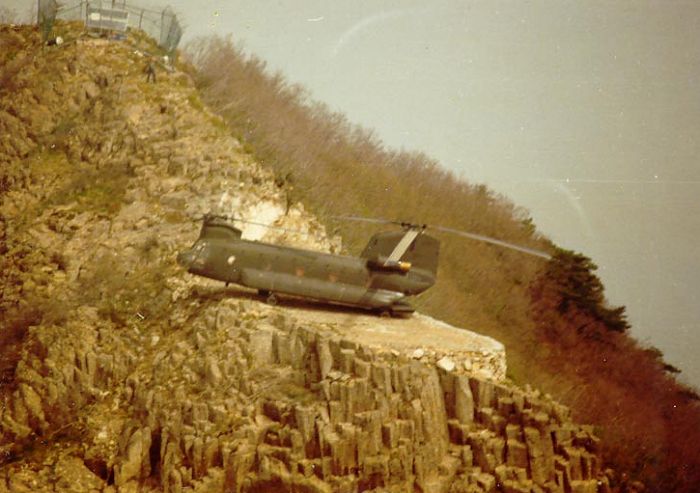
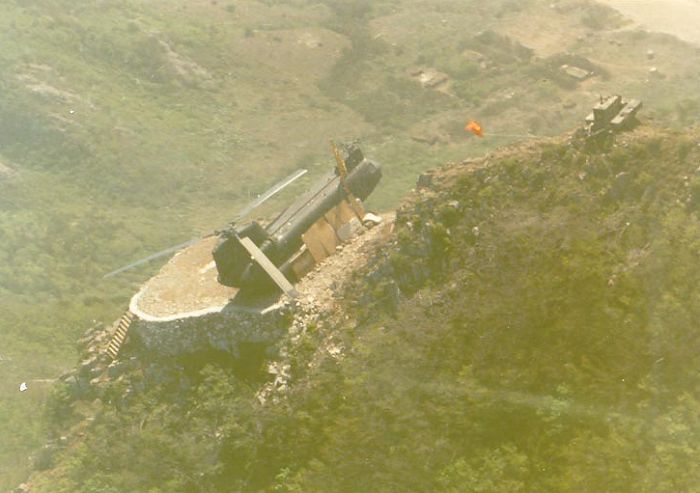
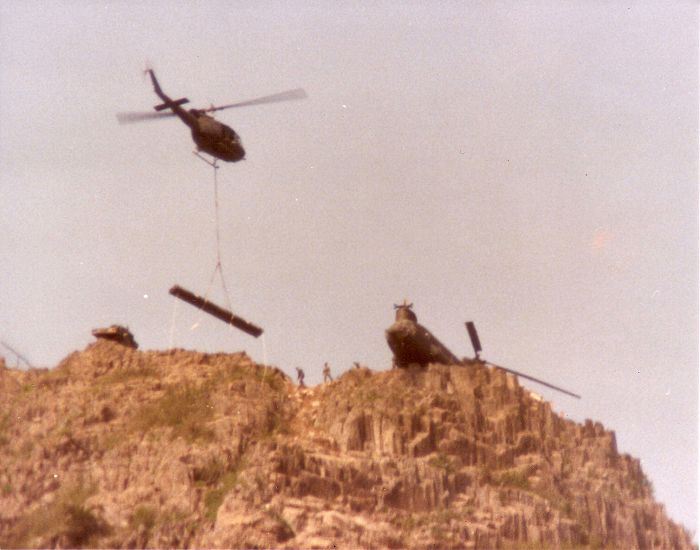
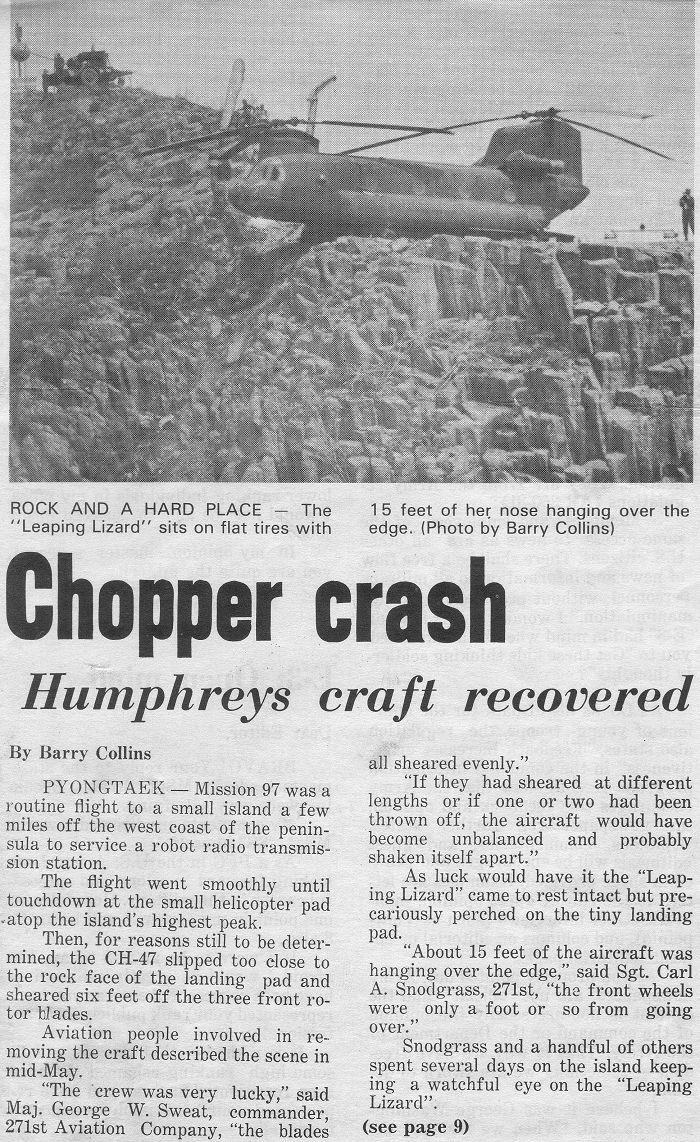
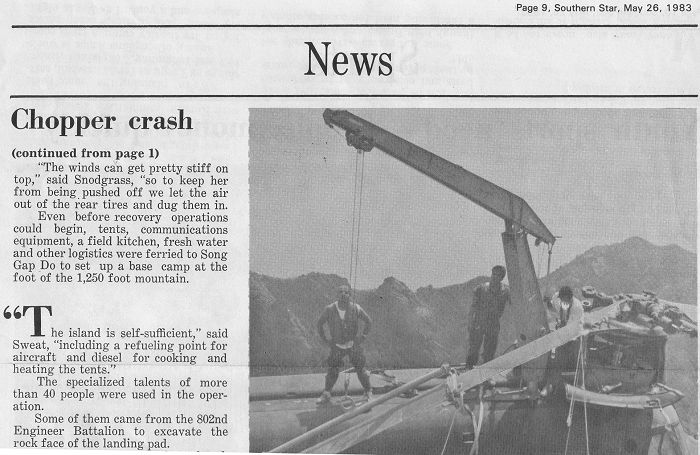
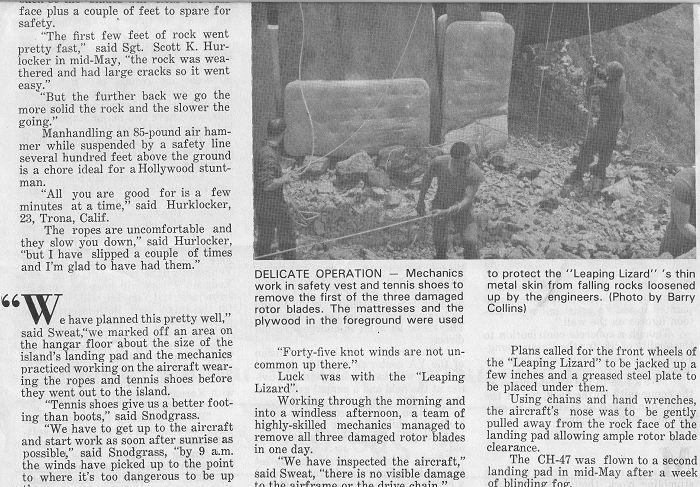
71-20955, was known as the "Widow Maker". On 27 April 1983, 71-20955 was performing a mission to an island mountain top in support of the United States Air Force (USAF). The mountain top was never intended for a Chinook to land on with all four gear on the ground. Cargo missions to the mountain were usually performed by doing a two wheel landing. During this particular mission the crew decided they could put all four gear on the landing pad. Upon touching down the forward blades contacted the mountain side next to the landing pad. It chopped approximately three feet off of each forward blade and the sudden stoppage damaged the combining transmission (C-Box). The aircraft lurched to the left and very nearly went over the side of the cliff. The recovery took several days. All three forward blades had to be replaced along with the C-Box. It was decided not to replace the forward transmission. Instead, it was inspected using a borescope and determined that it was "OK" to operate. Getting the parts, tools and personnel to the site was a logistical nightmare. They couldn't be air lifted to the landing pad because those involved were afraid that the rotor wash would send 71-20955 over the side. The parts and pieces had to be dropped off nearby and then hand carried to the site. One can imagine carrying an 800 pound C-Box up and down a rugged mountain side. In addition to repairing the aircraft, the mountain side where the blades made contact had to be excavated. Emergency Ordnance Disposal (EOD) personnel were brought in to blast some of the rock away so the new blades would clear at next engine startup. Note the picture below with the plywood against the side of the aircraft. It was placed there to protect the aircraft from flying debris blasted away from the mountain. When the aircraft was finally repaired and the mountain cleared away, 71-20955 started up. The helicopter was immediately lifted off of the pad. The stability of the ground underneath the forward gear was in question so it was decided that the best course of action was to get into the air as soon as possible. The aircraft was then flown to the beach below and additional maintenance performed before returning to home station at Camp Humphreys. Upon 71-20955's return home, the forward transmission was never replaced. In fact, it remained installed in the aircraft until 71-20955 was inducted into the Fiberglass Rotor Blade (FRB) modification. At that time, the forward transmission was replaced. The aircraft was well known to have mysterious noises coming from the forward transmission area periodically during flight. The source of the noises was never discovered and there was no other adverse affects. The noises did stop when the transmission was replaced some 3 years after the incident. For that reason the aircraft was named "Widow Maker". Sgt Ralph Wood explained to CHN, " One time when I was flying it on Christmas Eve on a mail haul mission to the Demilitarized Zone (DMZ), we had a complete intercom failure, no one could talk or hear. Then the transmission noises started. I was glad to return from that flight." |