|
|
|
| 89-00168 |
| (89-0168) |
|
|
|
|
|
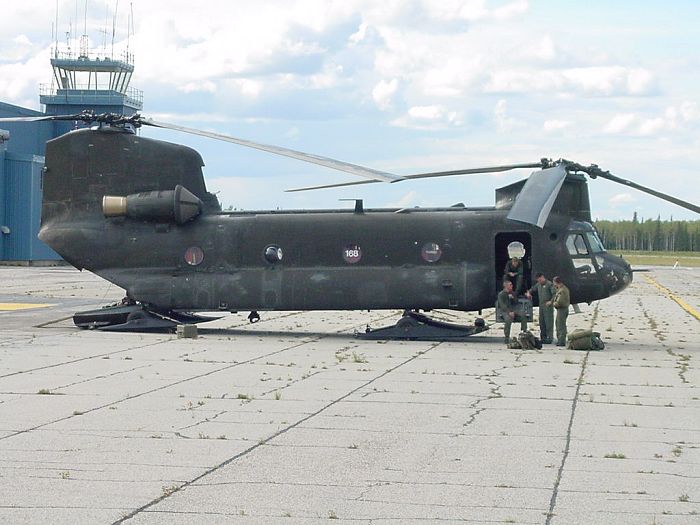
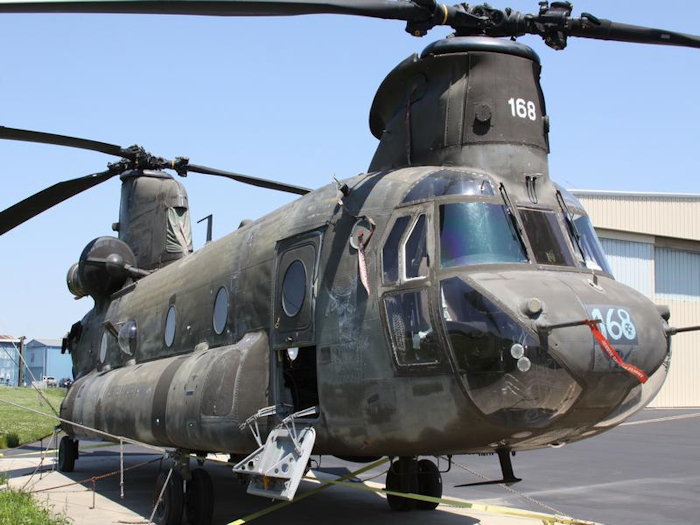
| 89-00168, Boeing D model kit number M3322, was a CH-47D helicopter. The U.S. Army acceptance date was 6 September 1990, at 2,444.1 aircraft hours. As of 28 September 2001, 89-00168 had accumulated 1,912.3 D model hours and 4,348.3 total aircraft hours. 89-00168 was a conversion from the original C model Chinook 70-15027. On 19 September 1989, 89-00168 was inducted into the D model program, conversion complete on 13 August 1990, and initially assigned to the unit that would eventually become B Company - "Sugar Bears North", 4th Battalion, 123rd Aviation Regiment, located at Fort Wainwright, Alaska. Fort Wainwright was the former historic Ladd Field of World War Two era fame. For many years, the "Sugar Bears" occupied Hangar 1 located on the north side of the airfield. B Company was the former C Company, 228th Aviation Regiment (16 October 1987 - 24 June 1994). C Company was the former 242nd Assault Support Helicopter Company (ASHC) - "Muleskinners" (located in Alaska from November 1971 through 16 October 1987). When United States involvement in the Vietnam conflict ended, 242nd ASHC was relocated from the Republic of Vietnam (RVN) to Alaska. The aviation unit in Alaska at the time was designated the 236th ASHC, 19th Aviation Battalion (April 1971 - November 1971). When the 242nd ASHC re-located to Alaska and re-formed, the unit name changed from "Muleskinners" to "Sugar Bears" and the unit designation went from the 236th ASHC to the 242nd ASHC. At some point, the unit was split into two companies. One company remained in Alaska and became known as "Sugar Bears North". The other company, C Company, 1st Battalion, 228th Aviation Regiment, was relocated to Fort Kobbe, Panama and became known as "Sugar Bears South". On 19 July 1996, 89-00168 was involved in a Class E accident. While attempting two wheel back taxi, rotor wash from 89-00168 blew open two tunnel covers from an adjacent parked aircraft removing them from that aircraft. On 13 January 1997, 89-00168 was involved in a Class D accident. During landing in snow conditions, the VHF antenna (Ram's Horn, see image below) was damaged. On 13 July 1997, 89-00168 was involved in a Class B accident. During a sling load operation, a howitzer inadvertently fell from the cargo hook. The aircraft was not damaged. On 24 April 2000, 89-00168 was involved in a Class D accident. During Hot Refuel operations, the Number 2 Engine Normal Beep Trim System failed. From 14 March 2001 through 9 July 2001, 89-00168, along with 87-00102, 89-00169, and 89-00176, self-deployed to Anchorage, Alaska, then via surface vessel to the country of Thailand to participate in Joint Training Exercise Cobra Gold 2001. The return trip to home station was in reverse order. On 29 August 2002, 89-00168 was involved in a Class E accident. During flight, the right hand combining transmission debris screen latched and would not reset. The Pilot in Command (PIC) performed emergency procedures and landed with no further problems. Maintenance replaced combining transmission and aircraft was returned to service. At some point, B Company, 4th Battalion, 123rd Aviation Regiment was redesignated B Company, 1st General Support Aviation Battalion, 52nd Aviation Regiment. On 19 November 2008, 89-00168 suffered from hard landing at the National Training Center (NTC), Fort Irwin, California, severely damaging the airframe and landing gear. The aircraft was trucked to Fort Lewis, Washington, for repairs. As of 13 June 2017, this aircraft was 45.6 years old. As of 13 June 2017, the last known location of 89-00168 was at Summit Airport (KEVY), Middletown, Delaware assigned to the Program Manager's Office, Redstone Arsenal, Huntsville, Alabama awaiting sale to the civilian market. Aircraft status: Undergoing maintenance, but otherwise Flyable. |
| Fort Greely, Alaska |
| On 28 August 2002, while on a V.I.P (very important person) support mission, 89-00168 experienced a Combining Transmission Right Hand Debris Screen Latch, as indicated on the Maintenance Panel. A precautionary landing was accomplished at Allen Army Airfield, a closed military airport on Fort Greely, Alaska. A request for maintenance support was initiated and a team from Fort Wainwright was quickly dispatched. Aircraft 87-00102 was preparing to conduct a pre-phase maintenance test flight, so was in a position to quickly reach the downed aircraft, about 45 minutes from home station. Upon 87-00102's arrival at Fort Greely, the below photograph was taken. |
|
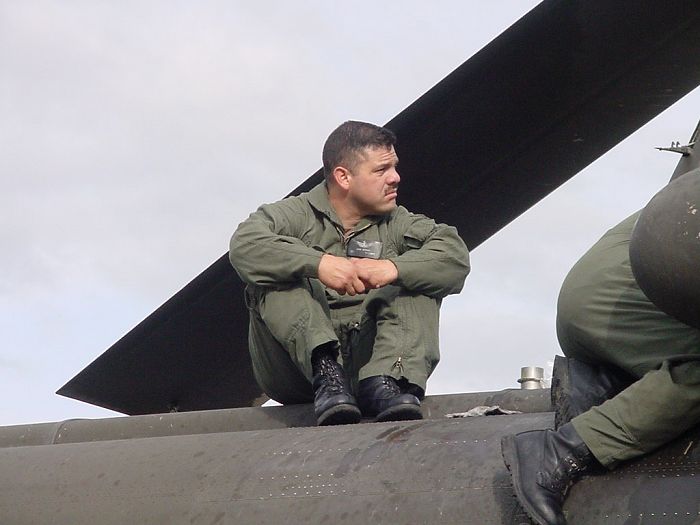
| The crew of 89-00168 holding their heads down in shame for breaking the helicopter and disturbing the maintenance officer during his regular noon time coffee and nap. |
| Two Maintenance Test Pilots (CW4 Mark Morgan and CW2 Gary Brown) and one Technical Inspector (SSG Jay Blessing) examined the contents of the Debris Screen (a wire strainer that detects metallic particles in the oil of the transmission that could indicate impending failure) and discovered fine, hair like stands of metal approximately 3/8 to 1/2 inch in length. The screen was cleaned and the aircraft run-up to see if another latch would occur. Sure enough, the Left Hand Debris Screen latched within minutes of engine start. Screens and filters were pulled and examined, netting the discovery of more particles. A decision was then made to replace the transmission in the field - not a simple task, but doable. |
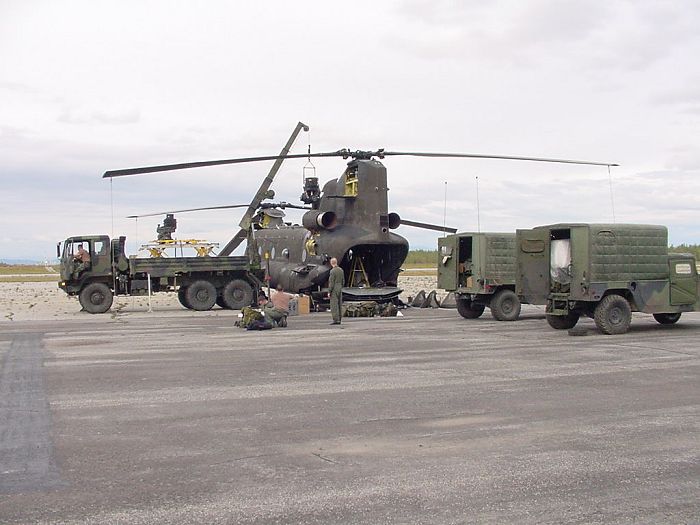
| Utilizing 87-00102, the maintenance team flew the beleaguered crew of 89-00168 home. Plans were made to transport additional soldiers, parts, and equipment to the field site the next morning for the task of replacing the defective component. To save time, a combining transmission is snatched out of an aircraft (89-00167) in Phase (an extensive inspection and repair of Chinook helicopters that occurs every 200 flight hours). Soldiers and equipment arrived at Allen Army Airfield via truck at approximately 1200 hours. |
|
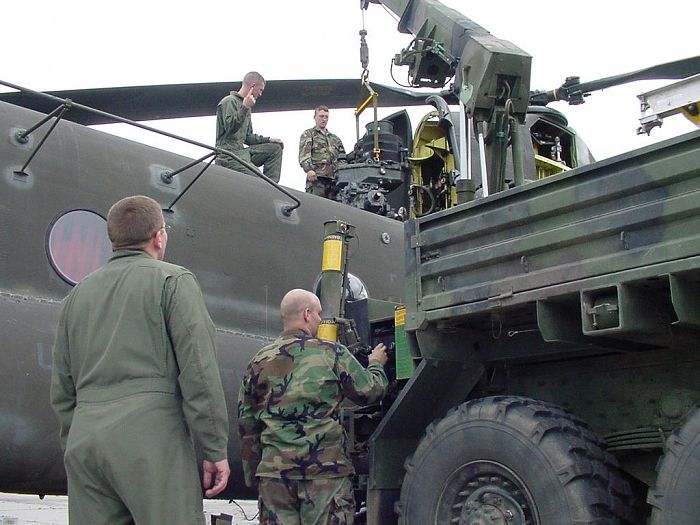
| CW2 Brown looks on as SGT John Hart, aided by PVT Smith, provides instruction to the operator PVT Nicotera, as they use a crane mounted on the back of an LMTV cargo truck to remove the old transmission in 89-00168. |
|
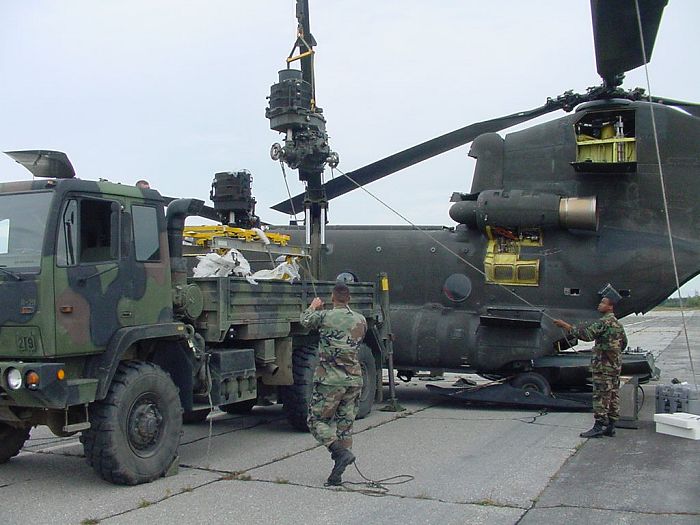
| SGT Clay (center) supervises the placement of the old combining transmission onto the transport stand in the back of the LMTV. The transmission will be sent to Corpus Christi Army Depot (CCAD), located at Corpus Christi, Texas, for teardown analysis and overhaul. Eventually, some needy Chinook will inherit the rebuilt transmission. |
|
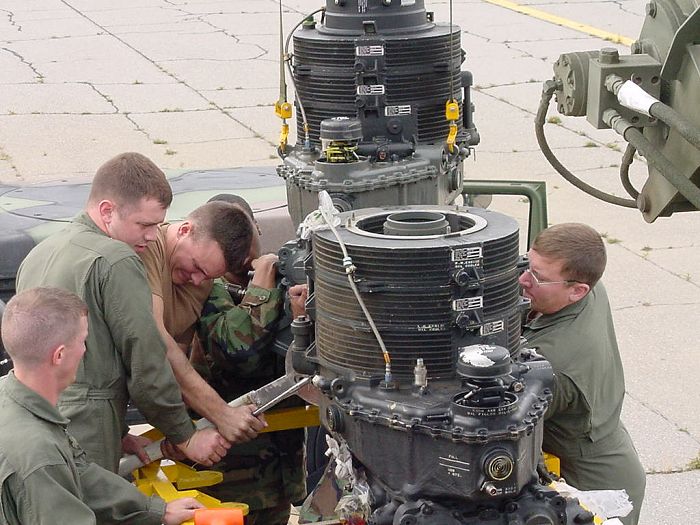
| Using pure muscle power, required components are removed from the old transmission to be placed on the new transmission. |
|
| As dark and gloomy rain clouds form overhead, the new transmission is carefully nudged into place on 89-00168. |
|
| SSG Jose Juvera, Quality Control NCOIC and Chief Technical Inspector for the "Sugar Bears", looks on as the finishing touches are completed on the transmission installation. |
|
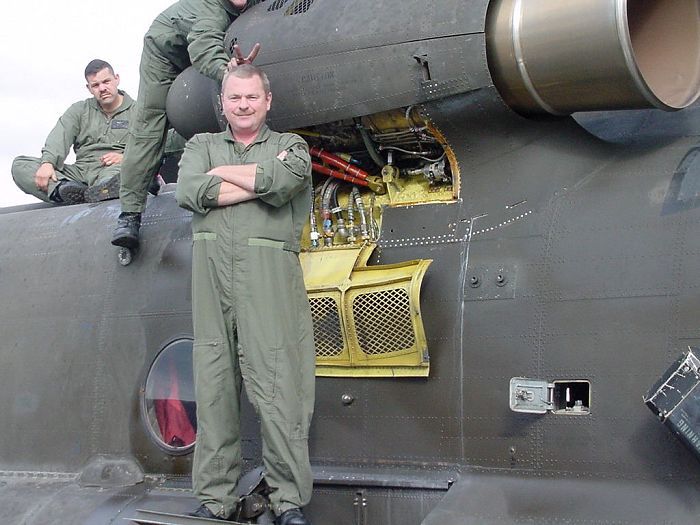
| CW4 Mark S. Morgan poses for a photo bomb while the work is being completed on 89-00168. |
| Even though the heavy rain showers eventually came, soaking the team to the bone, a good time was had by all. At approximately 2000 hours local time, the aircraft was run-up, the drive train vibration check was completed, and the aircraft was returned to home station at 2130 hours - giving the team a wonderful look at an awesome sunset in Alaska's interior. |
| The Incident at NTC |
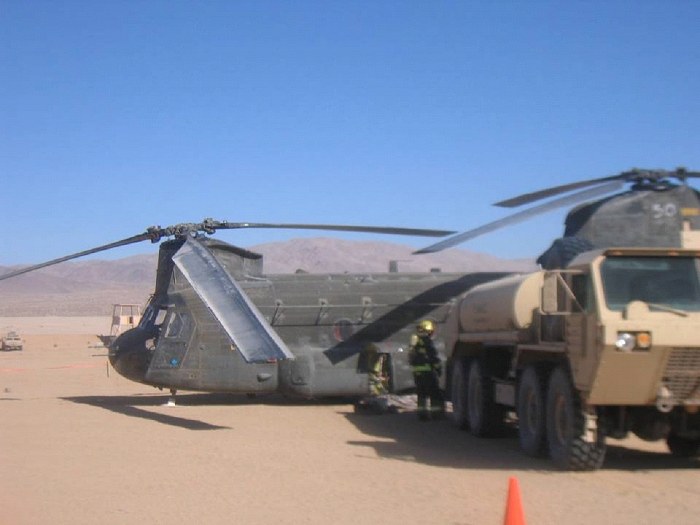
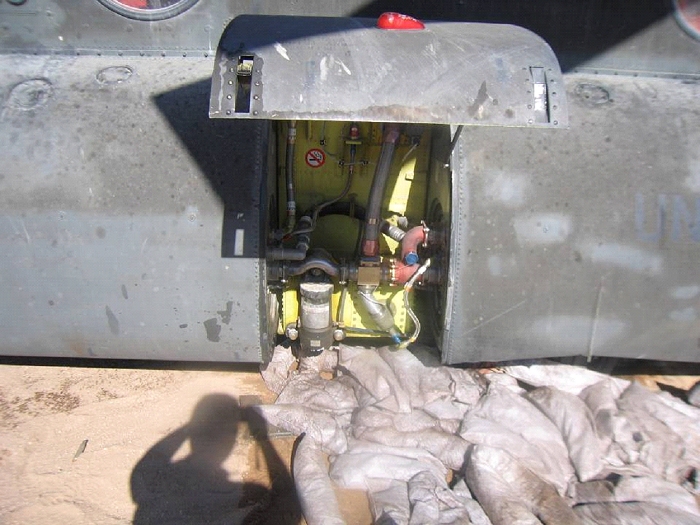
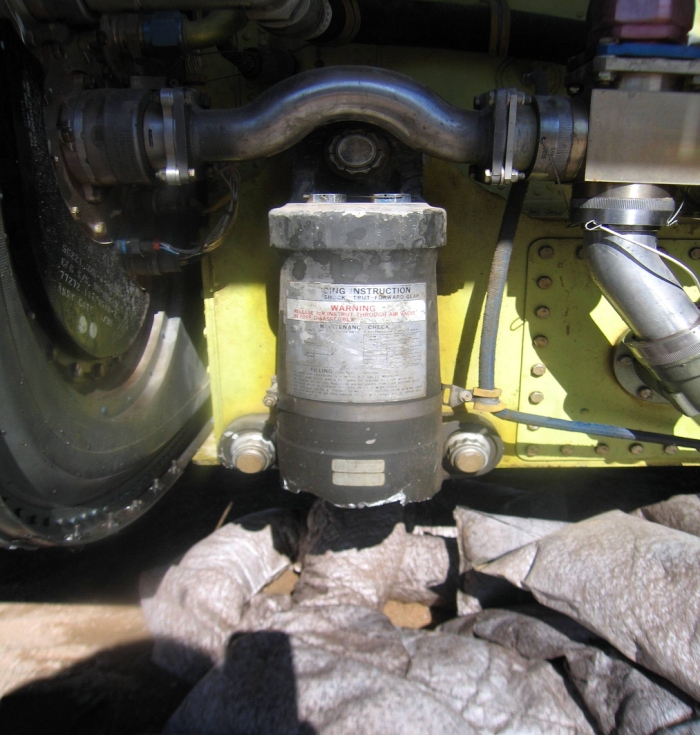
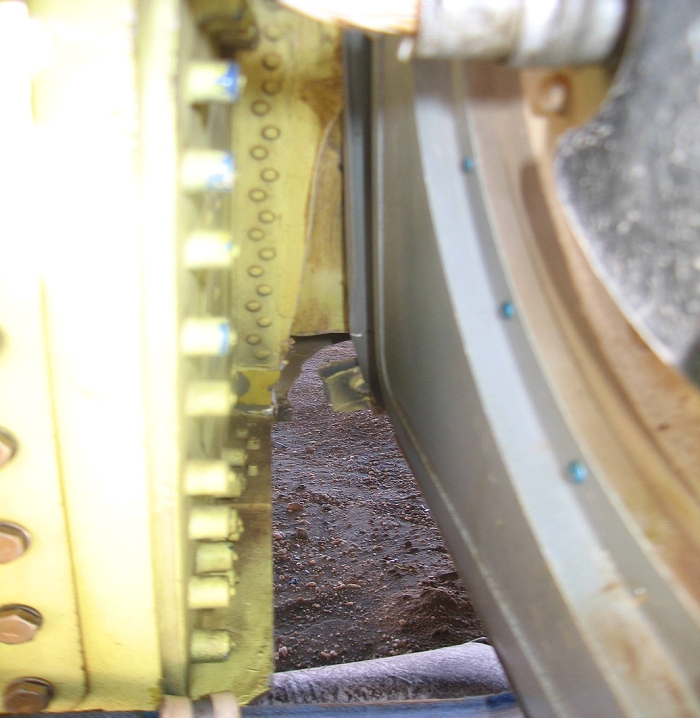
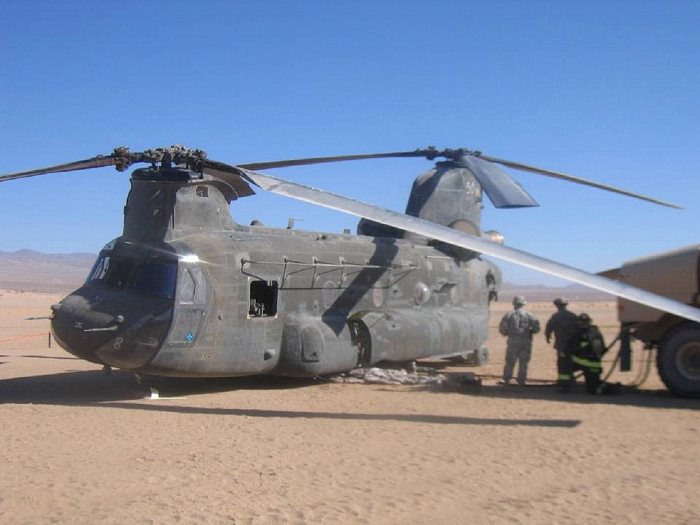
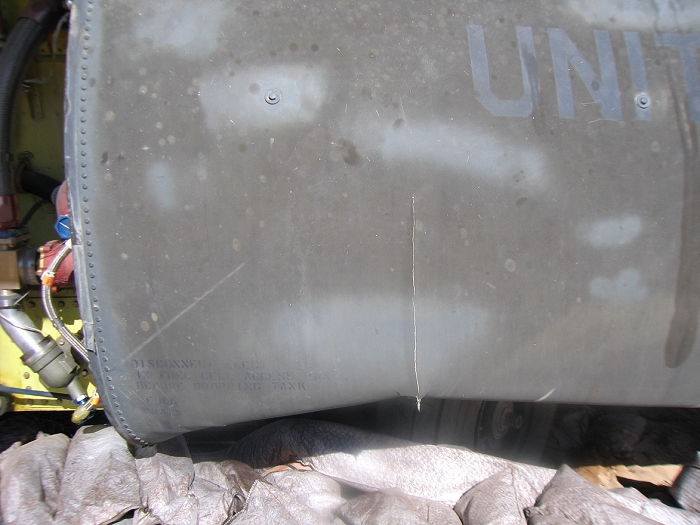
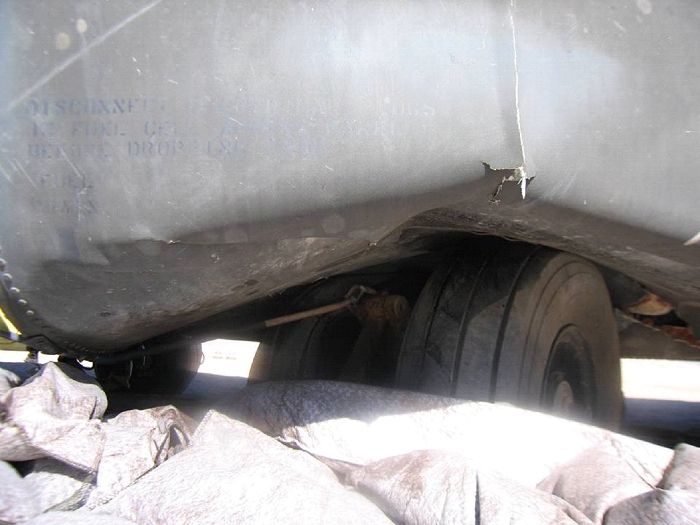
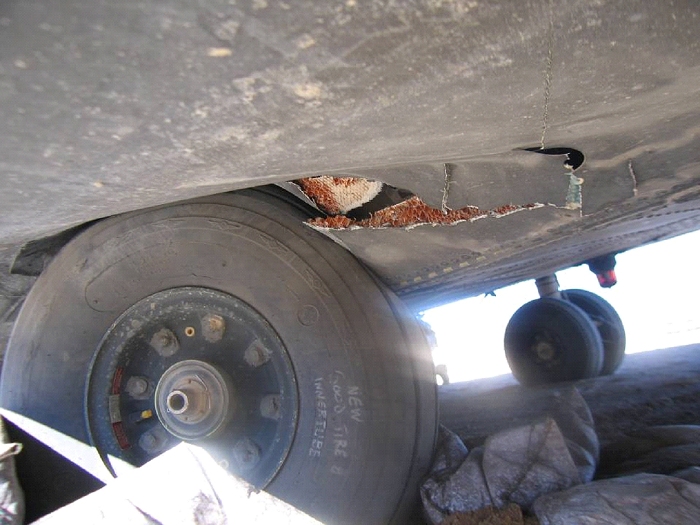
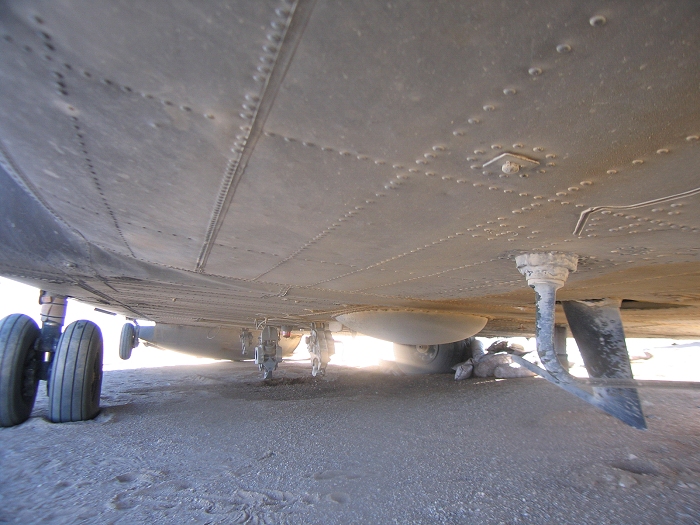
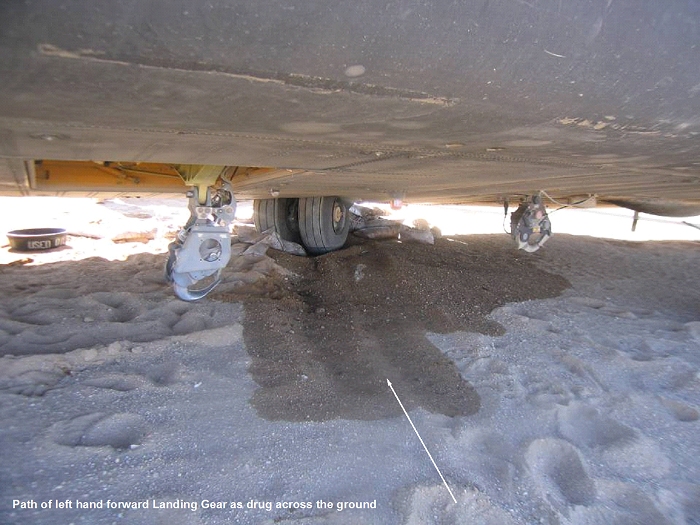
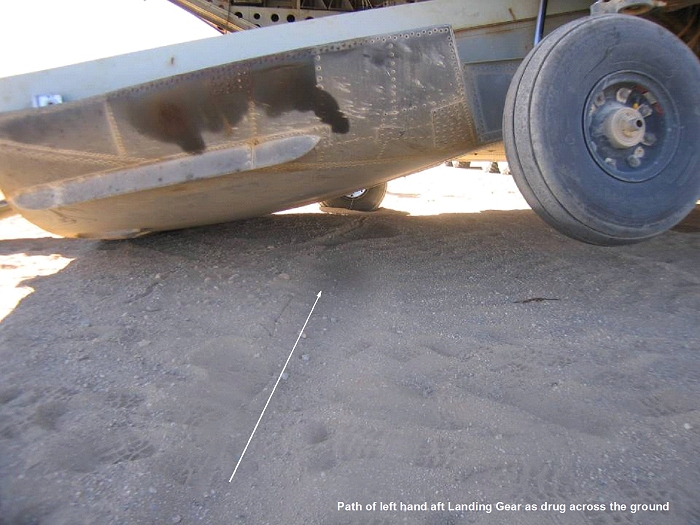
| 19 November 2008: While conducting battle field circulation of troops in support of training at the National Training Center (rotation NTC 09-08) located at Fort Irwin, California, CH-47D 89-00168 was making an approach to an area known as Forward Operating Base (FOB) Denver. Although minor blowing dust was present, it was light enough the crew never lost visibility to the ground. The copilot (PI) in the right seat was on the controls and initiated a hover down. The aft landing gear contacted first, followed by the forward landing gear. When the aircraft's left front landing gear contacted the ground, it sheared and folded under the aircraft. The folding of the landing gear caused a left roll of the aircraft; the PI reacted to the roll by moving the cyclic aft and right. The Pilot in Command (PC), in the left seat, rode the cyclic with the PI and performed an emergency engine shutdown in an effort to keep the rotor blades from hitting the ground. The Crew Chief, stationed in the aft portion of the cabin, exited the aircraft, discovered the aircraft was leaking fuel and announced the situation over the Intercom System (ICS). The crew and passengers exited the aircraft and ensured accountabilty for all personnel. |
|
|
|
|
|
|
|
|
|
|
|
|
|
|
| Resurrection |
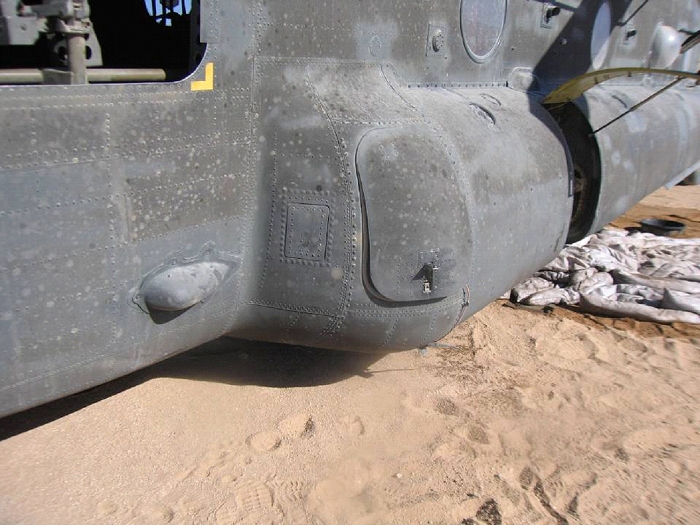
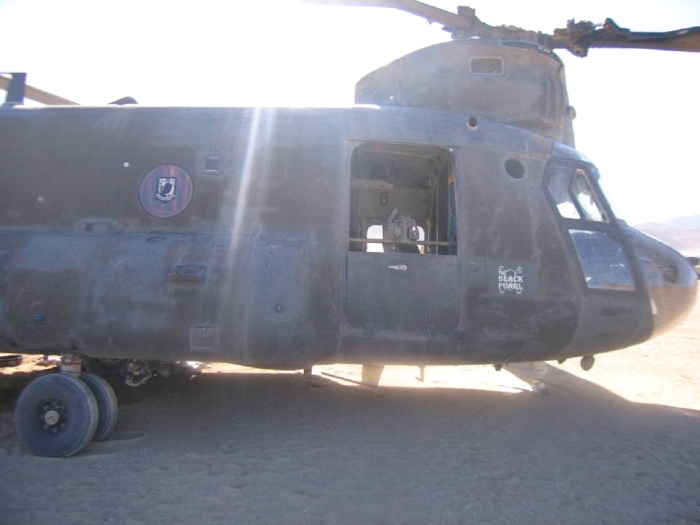
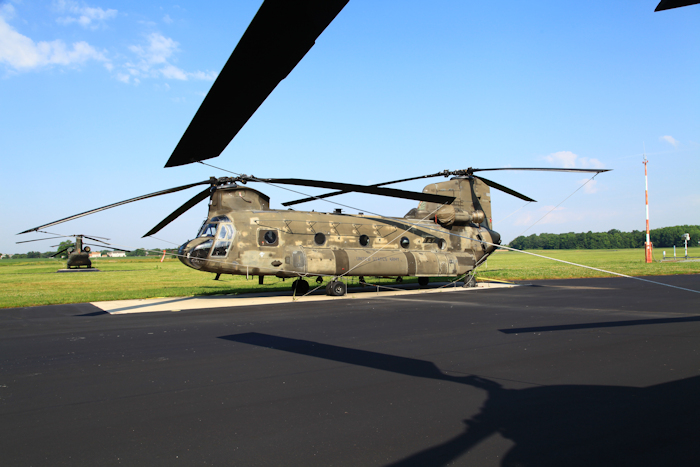
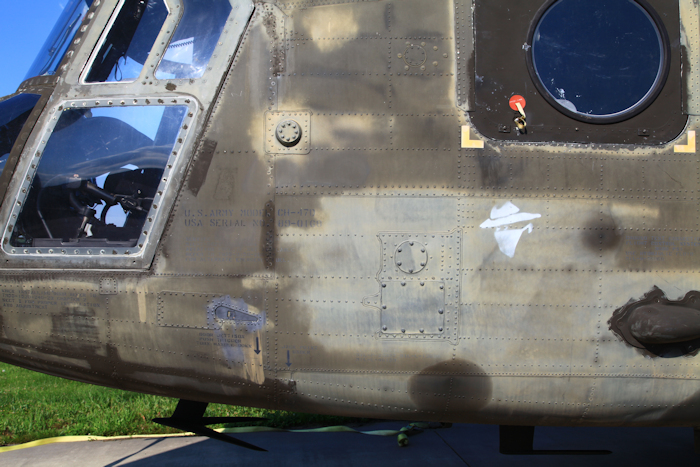
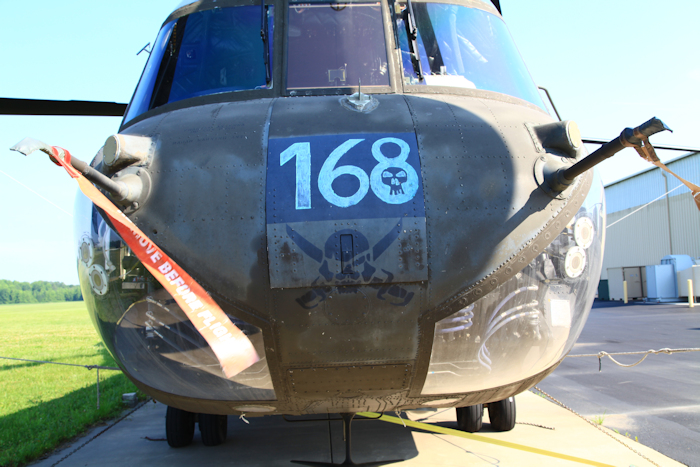
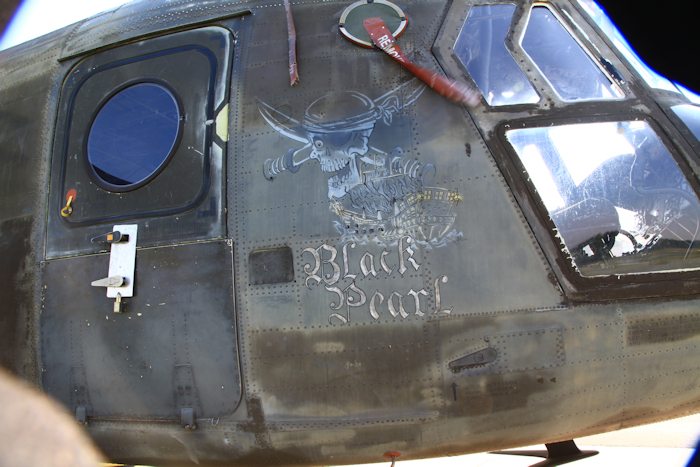
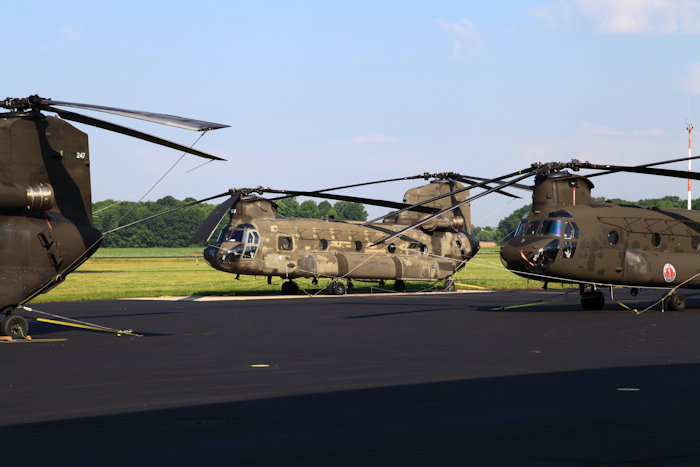
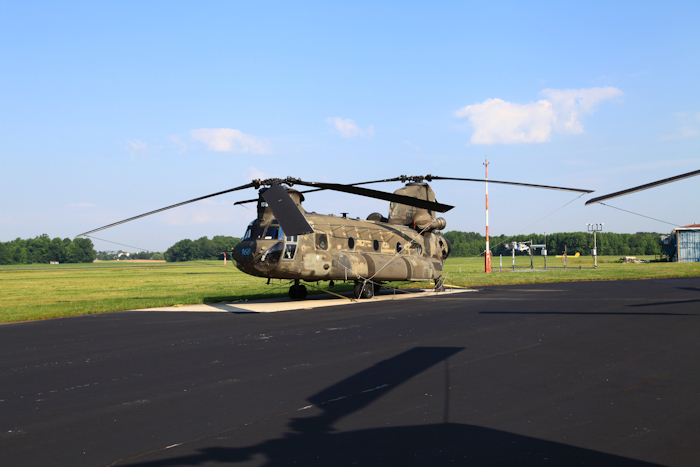
| 89-00168 was rediscovered hiding out at Summit Airport (KEVY), Middletown, Delaware. Seen in this series of photographs, 89-00168 has seen some hard times as a military transport aircraft. As of 13 June 2017, 89-00169 was offerred for sale to the civilian market. |
|
| CH-47D Chinook helicopter 89-00168 resting on the ramp at Summit Airport, Middletown, Delaware. Click-N-Go Here to view a larger version. |
|
| CH-47D Chinook helicopter 89-00168 resting on the ramp at Summit Airport, Middletown, Delaware. The Rams Horn Antenna is the black V shaped antenna left of center on the bottom of the fuselage in this photograph. Click-N-Go Here to view a larger version. |
|
| CH-47D Chinook helicopter 89-00168 resting on the ramp at Summit Airport, Middletown, Delaware. Click-N-Go Here to view a larger version. |
|
| CH-47D Chinook helicopter 89-00168 resting on the ramp at Summit Airport, Middletown, Delaware. Click-N-Go Here to view a larger version. |
|
| CH-47D Chinook helicopter 89-00168 resting on the ramp at Summit Airport, Middletown, Delaware. Click-N-Go Here to view a larger version. |
|
| CH-47D Chinook helicopter 89-00168 resting on the ramp at Summit Airport, Middletown, Delaware. Click-N-Go Here to view a larger version. |
| Accident Reports |
| Tunnel Covers - 19 July 1996, Class E |
| Cracked Antenna - 13 January 1997, Class D |
| Dropped Sling Load - 13 July 1997, Class B |
| Beep Trim Failure - 24 April 2000, Class D |
| C-Box Debris Screen - 29 August 2002, Class E |
| NTC Accident - 19 November 2008, Class C |
| GSA Auction to the Public |
| On 14 June 2017 CH-47D Chinook helicopter 89-00168, like many before it, went up for auction on the civilian market to the highest bidder. The minimum opening bid was $550,000 with a $100,000 dollar reserve to be met. |
|
| CH-47D Chinook helicopter on the ramp at Summit Airport, Middletown, Delaware awaiting sale - minimum bid $550,000. |
| Auction Documents |
| Auction Information |
| Historial Records |
| TBO Calculations |
| This aircraft was piloted by: |
| CW4 Mark S. Morgan, Pilot in Commnad, Maintenance Examiner, 1991, 2000-2003. |
| CPT Megan O'Neill, Pilot, 2000-2002. |
| CW2 Gary Brown, Pilot in Command, Maintenance Test Pilot, 2000-2002. |
| CW2 Brandon Stites, Pilot in Commnad, 2000-2002. |
| CW2 Justin Fortenberry, Pilot, 2001-2004. |
| Your Name Here. |
| This aircraft was crewed by: |
| SGT John Hart, Flight Engineer, 2002. |
| SPC Rigdon, Crew Chief, 2002. |
| Your Name Here. |
| Related Sites |
| Tail Number History |
   |
|
| Comments or Questions ? |  |
Email the Webmaster. |
|
|